October 25, 2026
Torres del Paine: World's collide
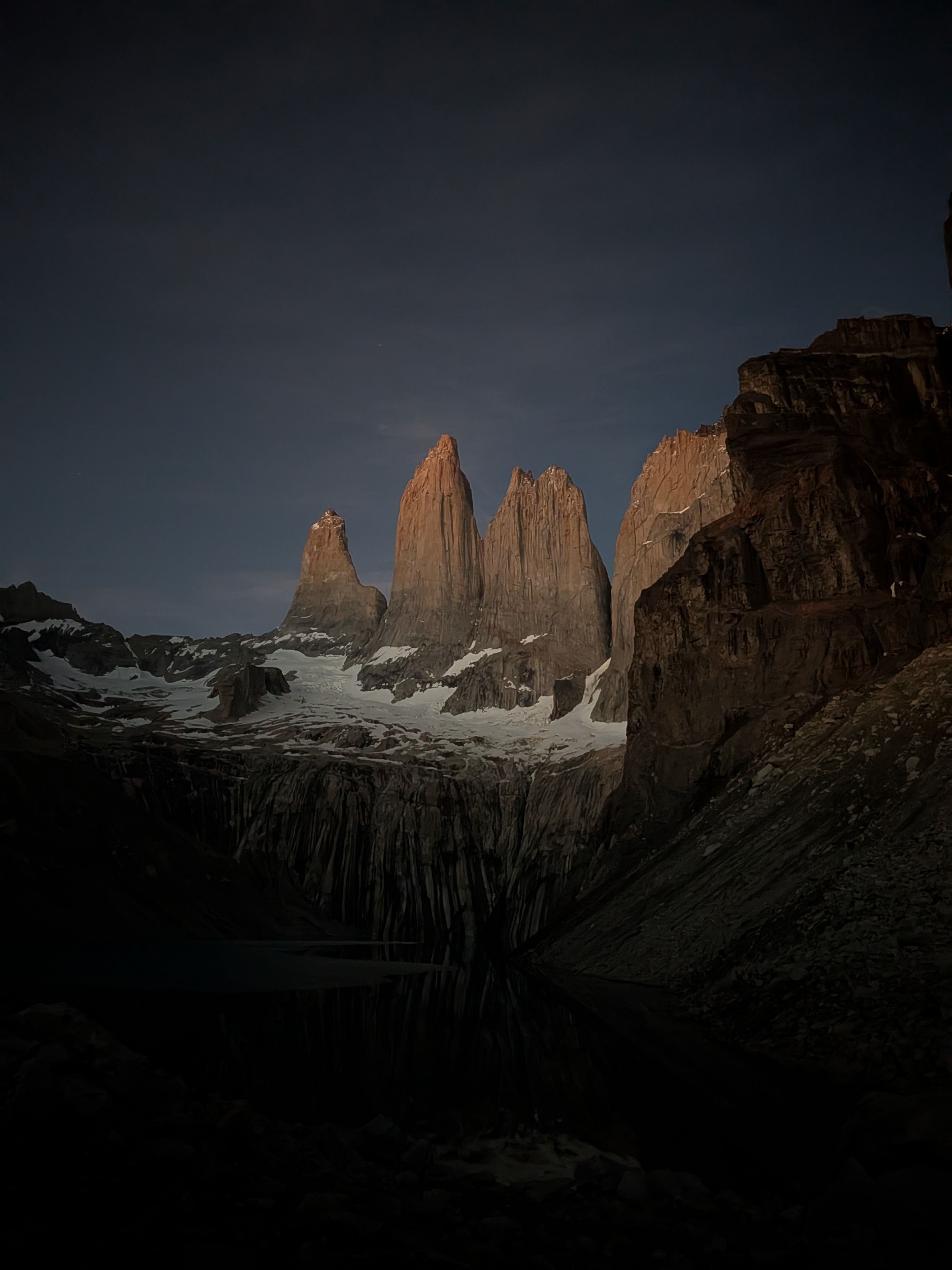
5:18 AM. I stop to catch my breath on the steep upward climb to Mirador Base Torres, looking up to rest my eyes in the dense stars above me, before looking down to notice the long trail of headlamps following the route up the mountain below. Both seem to wander aimlessly in the vast dark space. On the edge of another world.
Los Torres del Paine feels like a world from a fantasy series. Its towering granite massifs, sprawling glaciers, and stark blue lakes attract visitors from all over the world. Stepping into its glacier-carved valleys feels like stepping through a portal in time.
I have conflicting feelings about parks. They are often breathtaking, wonderfully organized, integral to protecting and conserving natural spaces, and making them accessible to the public. But this accessibility invites values and intentions that may conflict with our ideas of wilderness and wild spaces. And while many tourists are respectful of the places they visit, the rapid coming and goings of humans invites fleeting impressions and surface-level interactions.
For some people, the experience of “going into nature” means entering another world “away from humans.” People seek experiences of solitude and are frustrated when their remote sanctuaries are overcrowded. We avoid people in the backgrounds of our photos, and exclude evidence of comforts such as showers and charging outlets that would prove the domestication of our experience. But at the same time, this forced perspective is inconsistent with the real experience. The wilderness can not be separated from the impacts humans make on it, just as much as the impressions it leaves with us. Acknowledging this inseparability allows space for it to grow through stillness and observation.
Another Torres del Paine W Circuit hiker, Olly, told me his thoughts on visitors who rush through the landscape, stopping only to take selfies.
“It’s like they aren’t even living it. It’s empty. Superficial. They just come to say they have been.”
Olly and I spoke about how hiking can allow us to build relationships with what’
s around us, observe more deeply, and let us surrender to its power.
“Some people come to nature as an escape. To live in a different world for a while before they have to go back to their normal routines. But I see it as reset for our nervous systems. Nature is healing.”
Olly opened up to me about his life journey. He told me about his difficult childhood and later his close friend’s suicide, and how his life changed when he replaced drugs and alcohol for hiking as a nervous system regulator. He has been traveling through South America for many weeks, and told me he has come to realize his desire to be a mountain guide, so that he can bring the healing power of the natural world to others.
I see this sacred journey in those who come from all over the world to connect with Torres del Paine, seeking to lose themselves or find themselves or allow themselves to change. We seek the raw power and beauty of a wild landscape, and the way it transforms us.
Even if much of the visitors view it as an escape, a place separate from “reality”, it is still very much a part of our experience, and can open even more worlds when we are willing to listen deeply and move slowly.